
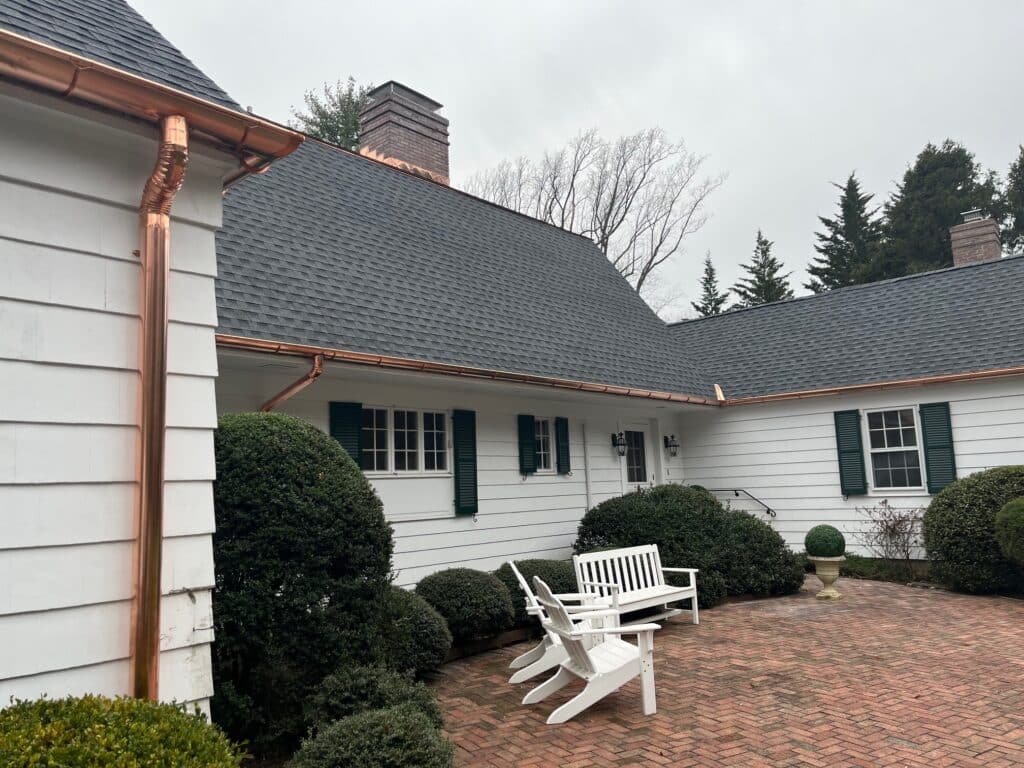
When upgrading your drainage system to handle heavy Connecticut nor’easters, you cannot simply assume the job was done right without a physical validation. Understanding how professionals test newly installed gutters in Stamford, CT, ensures your home’s foundation stays dry and protected during torrential coastal downpours. A newly mounted system might look flawless from the driveway, but hidden pitch issues or improper bracket anchoring only reveal themselves under simulated high-volume stress tests.
Key Takeaways
- Simulating extreme downpours via high-volume water tests reveals subtle system pitch mistakes instantly.
- Checking the structural bracket stability under weighted conditions helps protect the roofline from heavy winter ice loads.
- Verifying smooth downspout discharge ensures water moves safely away from the concrete slab or crawlspace.
- Eliminating standing water within the gutter system helps reduce mosquito breeding during the warmer months.
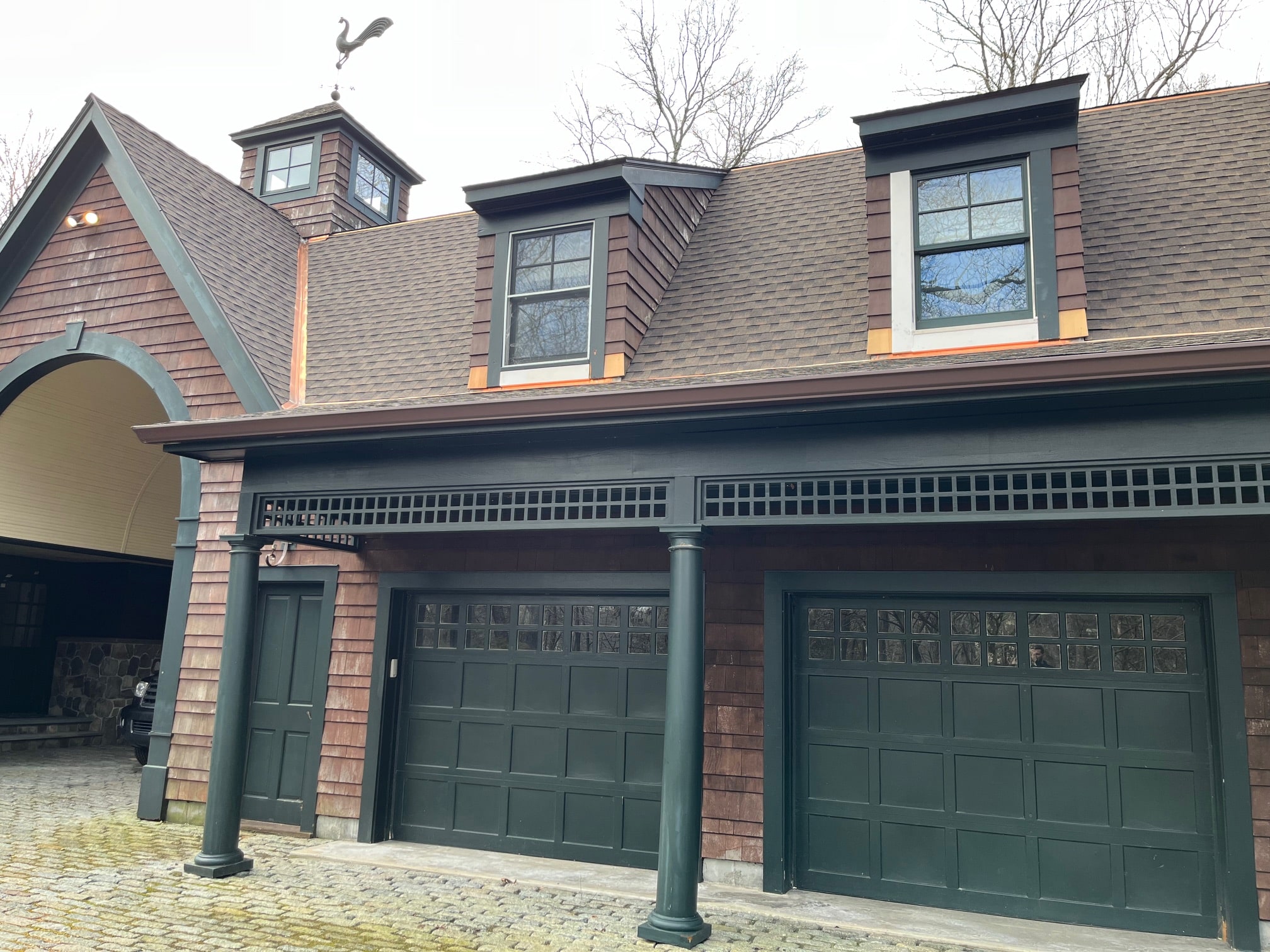
Why Is a Physical Flow Test Mandatory for Newly Mounted Gutters?
A visual check alone cannot confirm if a drainage system will function properly during an aggressive downpour. By conducting a dynamic flow test, technicians verify that water exits the roofline swiftly without pooling or overflowing. This critical validation goes beyond theoretical calculations, proving that the slopes, miters, and downspout drops handle high-volume coastal rainfall as intended.
The Professional Verification Routine
The Dynamic Water-Volume Flush
- Introduce a steady, high-volume stream of water into the highest point of the gutter run.
- Observe the water column’s speed to confirm it flows continuously toward the outlets without slowing.
The Structural Load Stress Test
- Apply physical downward pressure to confirm that the hidden hangers are securely fastened through the fascia into the home’s structural framing.
- Verify the system does not sag or pull away from the fascia board under the sudden weight of trapped water.
- Confirm field execution accuracy, because knowing how professionals test newly installed gutters in Stamford, CT, means testing for both weight and movement.
Downspout Discharge Verification
- Inspect the elbow joints and structural boots to ensure water exits cleanly without leaking behind the siding panels.
- Track the exit stream to verify that water terminates a safe distance from the residential foundation walls.
The Benefits of Professional Water-Flow Testing
Property Risk Mitigation
- Fascia Decay Avoidance: Eliminates hidden leaks that quickly saturate wood trim, saving you thousands in carpentry repairs.
- Soffit Moisture Control: Prevents humid air from backing up into the attic space, stopping structural mold before it starts.
Mechanical System Calibration
- Pitch Angle Tuning: Fixes minor calculation errors that cause water to pool on flat roofline sections.
- Miter Joint Integrity: Validates that specialized tripolymer sealants form a permanent bond at complex roof corners.
Key Components of System Verification
- Tripolymer Sealant: An advanced commercial adhesive used at endcaps and miters that remains completely flexible during sub-zero winter temperatures.
- Hidden Hanger: A heavy-duty internal structural bracket that anchors the aluminum channel directly into the home’s rafter tails.
- Pitch Gradient: The calculated slope required—typically one-quarter inch of drop for every ten feet of gutter system run—to move water efficiently.
- Downspout Boot: A protective fitting installed at the bottom of certain downspouts to direct water into a drainage system or protect the lower section from impact.
Lessons From the Field
The reality on the ground is that many standard contractors pack up their tools the second the last screw goes into the fascia board. They assume that because the math looked right on paper, the water will behave perfectly. During our years of servicing Fairfield County, we have observed multiple shortcut crews bypass proper verification entirely. Watching how professionals test newly installed gutters in Stamford, CT, reveals the difference between a system that fails during the first winter freeze and one that lasts decades. We frequently fix brand-new systems installed by other companies, where a slight dip in the middle of a 50-foot run creates a permanent two-inch-deep pool of stagnant water. That trapped water doesn’t just attract breeding pests; it freezes solid in December, tearing the brackets loose and warping the entire aluminum line.
Secure Your Home’s Complete Drainage Defense
Investing in an unverified gutter system leaves your property exposed to sudden structural failures and expensive landscape erosion. If you want to ensure your roofline remains secure, discover how professionals test newly installed gutters in Stamford, CT, by scheduling an elite inspection with All State LeafGuard Inc. today. Our field team doesn’t rely on guesswork or short-sighted visual approximations. We meticulously engineer and test every single foot of your seamless system to guarantee it withstands the harshest coastal elements.
By addressing hidden pitch anomalies and reinforcing high-stress load areas before we wrap up a project, we protect your foundation, siding, and landscaping from long-term moisture decay. Do not let the next heavy nor’easter turn your property into a construction headache. Trust a local team that values precision, durability, and upfront professional execution above everything else. Explore our comprehensive design and defense systems online at https://leafguardofwestchester.com/ to see how we permanently safeguard local properties. Call (914) 686-3030 right now to secure an expert assessment for your residence.
How Long Does a Standard Gutter Water-Flow Test Take?
A professional flow test typically takes 20 to 30 minutes, depending on the total length of the system. Technicians run water through each distinct channel to verify pitch accuracy and downspout-clearing speed.
What Happens if Water Pools in a Newly Installed Gutter?
Standing water indicates an improper pitch gradient along that section of the roofline. Installers should adjust the gutter pitch by repositioning hangers or realigning the gutter section so water drains properly toward the downspouts.
Can a Gutter System Be Tested During Freezing Winter Weather?
No, traditional water-volume flow testing cannot be safely performed at sub-freezing temperatures due to the risk of ice formation. Instead, technicians utilize high-precision digital levels to verify the pitch gradient mechanically until warmer weather allows a wet test.
Why Do New Gutter Seams Leak During an Initial Flow Test?
Initial seam leaks occur when the commercial tripolymer sealant is applied to a damp surface or doesn’t cure fully before testing. If a leak appears, technicians must dry the area completely, strip the bad compound, and apply fresh sealant.
How Many Downspouts Are Required for an Average Roofline?
As a general rule, your system requires one downspout for every 20 to 25 feet of continuous gutter length. Large or steep roof footprints often require additional oversized downspouts to handle rapid, high-volume water runoff during severe storms.