
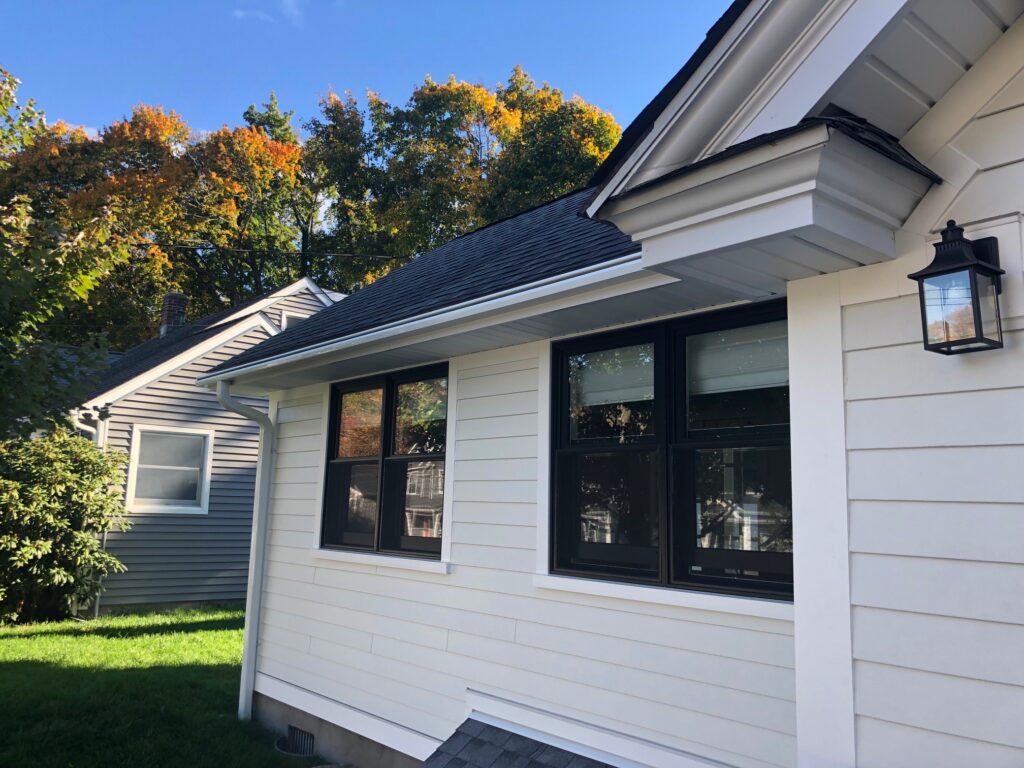
In Westchester County, during the time when there is a storm, you will need a good drainage channel that can carry away thousands of gallons of rainwater from the area near your roof. However, when the drainage channel develops a leak due to cracks, sags, and pulls back from the fascia board, structural damage takes place in a silent manner. You may not realize how much damage leaking gutters can do until you see water pooling around your foundation walls. At All State LeafGuard Inc., we install new gutter systems to avoid exterior decay inside your home.
Key Takeaways
- Saturated soil expands rapidly, placing intense hydrostatic pressure against basement concrete and masonry footings.
- Escaping roof runoff seeps behind fascia boards, rotting hidden roof decking and damaging attic ventilation.
- Uncontrolled overflow washes away grading, destroys perimeter landscaping, and floods flower beds within hours.
- Installing a one-piece curved hood prevents debris buildup and keeps rainwater flowing smoothly during severe storms.

What Happens To Your Home Foundation When Rainwater Overflows?
Water accumulation near the foundation will make the soil lose its structural integrity and force water to pass through solid concrete walls. Water accumulation from rainwater that falls off the roof right next to the perimeter and not using extended downspouts will cause the surrounding soil to swell and crack the basement masonry.
- Foundation Protection: Moving roof water at least ten feet away keeps basement walls dry and stable.
- Exterior Shielding: Directing runoff away from siding prevents stained brick, peeling paint, and siding rot.
- Value Preservation: Keeping basements dry avoids wood rot and protects resale appraisal value.
Why Does Local Westchester Weather Accelerate Gutter Failures?
Freezing winter temperatures turn trapped gutter debris into heavy ice dams that tear brackets right out of the fascia wood. During early spring thaws, backed-up slush forces meltwater directly under your starter shingles. When investigating how much damage leaking gutters can cause in White Plains, NY, local weather swings explain why joint seams split so quickly.
Three Steps To Long-Term Exterior Protection
Complete Roofline And Fascia Inspection
- Technicians examine the soffits, fascia, and roof edge for hidden rot.
- Damaged wood gets replaced so new hangers anchor into solid backing.
On-Site Custom Roll-Forming
- Crews fabricate heavy-gauge aluminum on-site to match the exact length of your roofline.
- Continuous runs eliminate weak seams that separate under heavy snow loads.
Calibrated Pitch Alignment
- Installers calculate the exact slope needed to keep water moving fast toward downspouts.
- Proper angling stops pooling water that attracts mosquitoes and breeds algae.
Are Covered One-Piece Gutter Systems Worth The Investment?
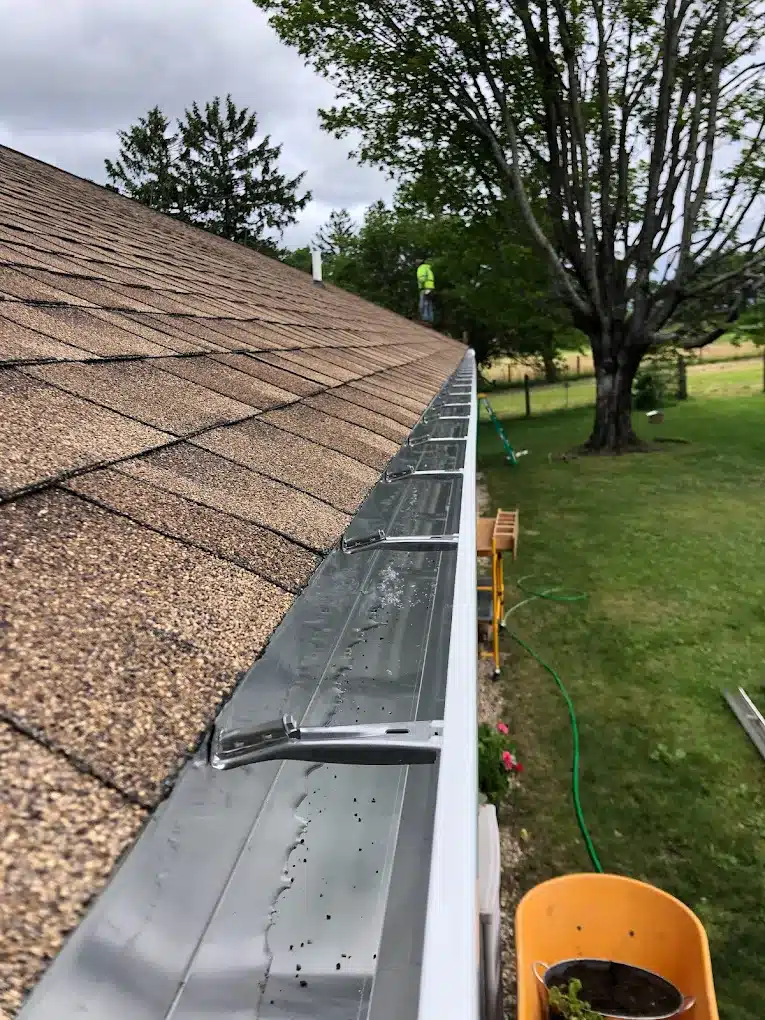
Investing in a one-piece hooded design completely removes the danger of ladder falls and recurring cleaning bills. Traditional open channels collect pine needles, oak leaves, and shingle granules that create dense dams. Liquid adhesion pulls water into the curved hood while shedding debris straight to the ground.
Which Parts Of Your House Suffer First When Runoff Escapes?
Your fascia boards and roof decking rot first because leaking joints drip moisture against the wood behind the trough. Once that wood softens, water creeps into soffit vents and down exterior wall cavities. To understand how much damage leaking gutters can cause in White Plains, NY, look at how quickly moisture ruins building materials from the roofline down.
- Fascia Board: The horizontal trim board mounted right behind the gutter trough that protects the roof rafters.
- Hydrostatic Pressure: The mechanical force exerted by waterlogged soil pushing inward against concrete basement walls.
- Soffit Vent: The perforated underside of the roof overhang that circulates fresh air through the attic space.
- Downspout Extension: A pipe fitting that channels discharged rainwater safely away from foundation footings.
Lessons From the Field
Most homeowners only look up at their gutter system when water spills over the front edge like a waterfall. By then, the real destruction has already happened behind the metal. When joints leak, water runs down the back of the trough and soaks the fascia board for months without being seen. If your gutters feel loose or your exterior paint is bubbling along the roofline, the backing wood is likely already decaying.
Protect Your Home From Costly Foundation And Roof Damage
Ignoring rusted seams or sagging troughs turns minor drainage overflow into thousands of dollars in foundation stabilization and carpentry repairs. Our one-piece hooded aluminum systems keep debris out, handle torrential downpours, and protect your property through every season.
If you are concerned about how much damage leaking gutters can cause in White Plains, NY, reach out to our local team today for an honest property evaluation. Call (914) 686-3030 to speak with our specialists and schedule your free on-site estimate.
How Often Should Homeowners Replace Sectional Gutters?
Most standard sectional aluminum setups last between fifteen and twenty years before caulked joints fail. Replacing aging sections with seamless channels removes the weak connection points that leak and cause wood rot.
Can Clogged Drainage Really Cause Basement Flooding?
Yes, because overflowing rainwater collects along the foundation wall and forces its way through porous concrete. Directing roof runoff through unobstructed downspouts keeps surrounding soil from becoming oversaturated.
Why Are Seamless Gutters Better Than Store-Bought Sections?
Continuous aluminum channels have no mid-run seams that can separate, warp, or leak over time. Sectional pieces rely on silicone sealants that crack under freezing winter temperatures, leading to continuous drips.
What Is The First Visible Sign Of Hidden Fascia Rot?
Peeling paint, water stains on the soffit, and loose mounting brackets indicate wood decay. When water drips behind the trough, it softens the fascia wood until the mounting screws lose their grip.
Does A Built-In Hood Keep Out Pine Needles And Small Debris?
The curved hood uses surface tension to draw water inside while shedding pine needles and leaves. Debris rolls harmlessly off the rounded nose and falls straight to the lawn below.